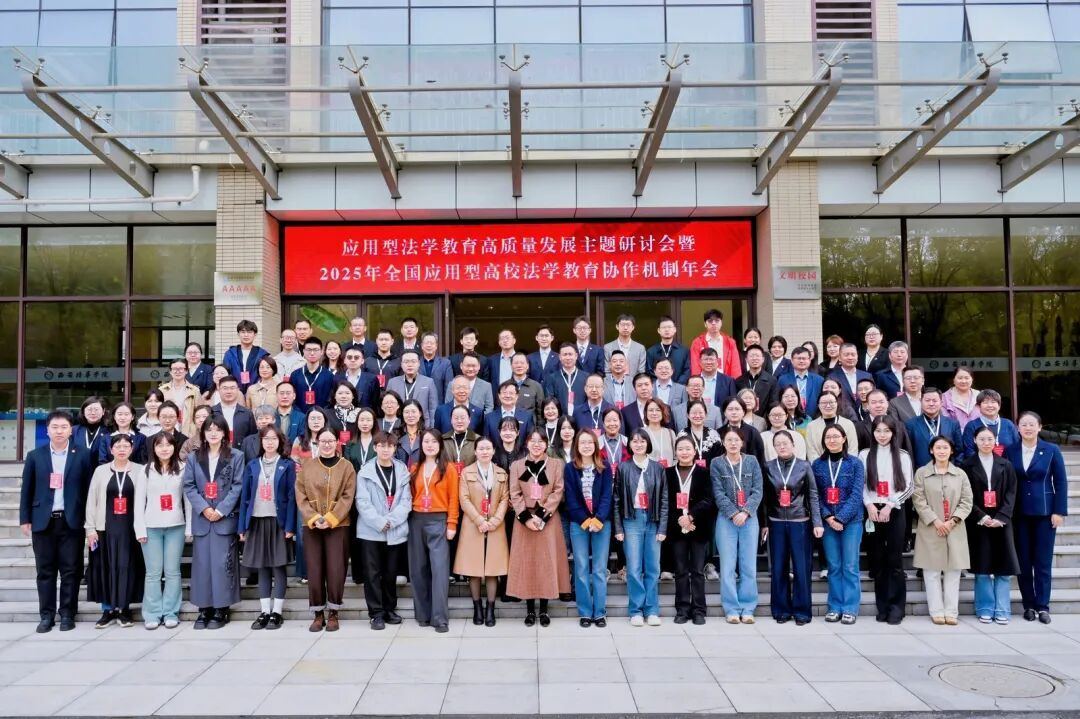
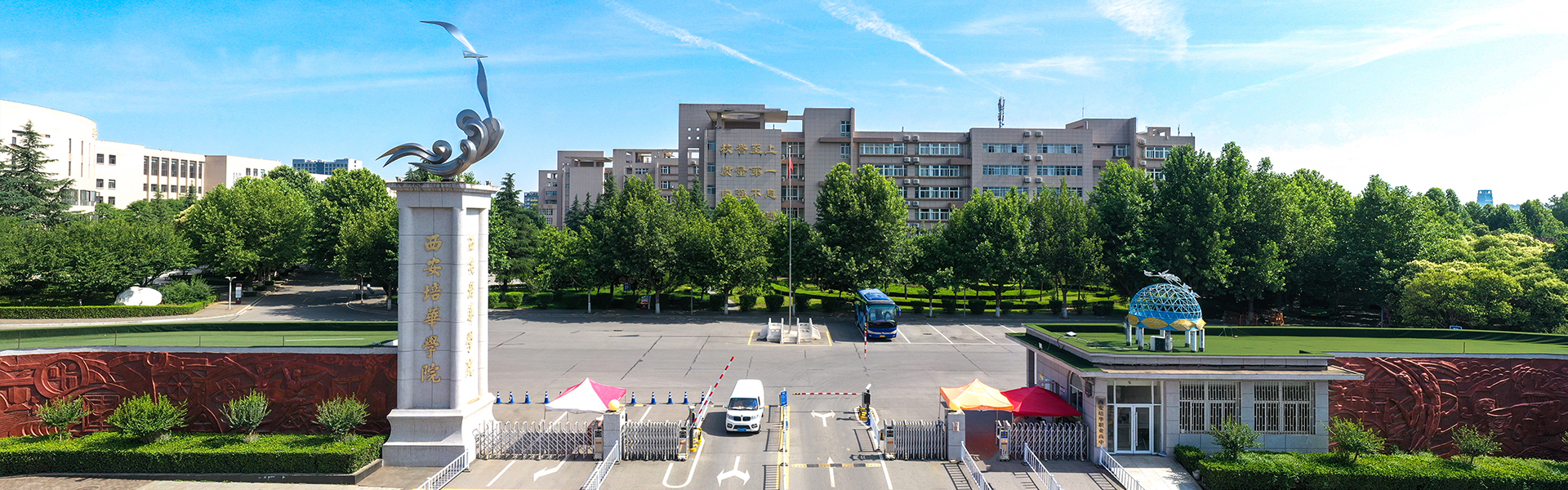
On October 18th, the Symposium on the High-Quality Development of Applied Legal Education and the 2025 Annual Conference of the National Collaborative Mechanism for Applied Legal Education in Universities was held at Xi’an Peihua University. This conference was hosted by the National Collaborative Mechanism for Legal Education in Applied Universities, organized by Xi’an Peihua University, and co-organized by China University of Political Science and Law Press, Hangzhou Fayuan Software Development Co., Ltd. and Shenzhen Yaxun Vision Digital Technology Co., LTD. It attracted many experts and scholars from over 30 universities across the country.
The opening ceremony was presided over by Zhao Jie, Deputy Dean of the School of Law at Xi’an Peihua University. President Li Yingfang of Xi’an Peihua University delivered a welcoming speech. He expressed his hope to jointly explore new models of industry-education integration with the guests present, share new experiences in practical teaching, and reach consensus and form synergy in aspects such as curriculum reform, faculty development, and the establishment of practical training platforms. In addition, Chen Hao, General Manager of Hangzhou Fayuan Software Development Co., LTD., and Zhang Ji, General Manager of Shenzhen Yaxun Vision Digital Technology Co., LTD., delivered speeches respectively. They both highlighted their commitment to leveraging specialized software and advanced technologies to support the development of applied legal education programs.
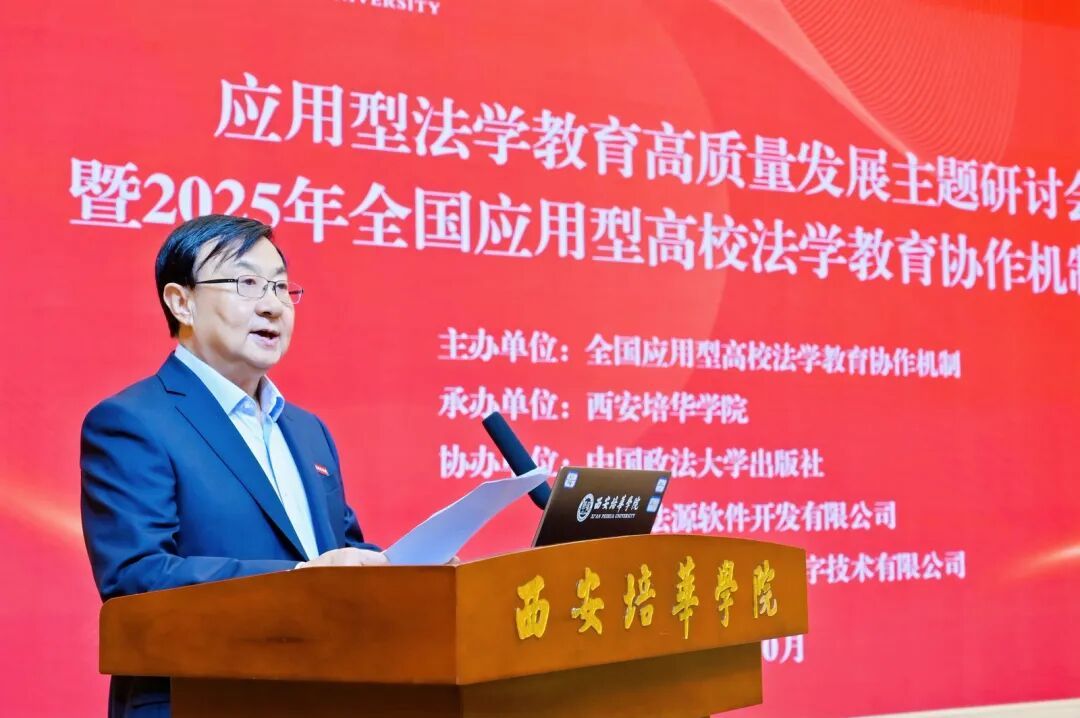
Li Yingfang, President of Xi’an Peihua University Delivered a Welcome Address
Liu Hong, Secretary-General of the National Collaborative Mechanism for Legal Education in Applied Universities and the dean of the Law School of Dongguan City University, delivered a work report. She concluded that over the past year, the collaboration mechanism has carried out faculty training, mock trials and course design in the field of foreign-related law, vigorously developed micro-specialties such as enterprise compliance and digital law, and also facilitated mutual learning and exchanges among multiple universities. In the future, the national collaborative mechanism for legal education in applied universities will continue to focus on the actual needs of applied universities, strengthen inter-university exchanges and cooperation, and promote the high-quality development of applied law programs.

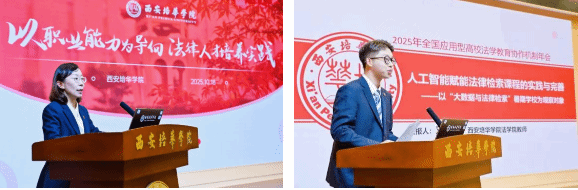
Wang Sifeng, Vice President of the Shaanxi Law Society and Dean of the Law School of Northwest University, delivered a keynote speech on the theme of “Exploration and Practice of Empowering Legal Education with Artificial Intelligence”. President Wang Sifeng shared the path of integrating legal education with artificial intelligence, proposing to innovate the education and training mechanism of law schools, strengthen practical teaching links, and expand the content of artificial intelligence professional education. The report was presented in a clear and accessible manner, with extensive references, bringing the atmosphere of this meeting to a climax.
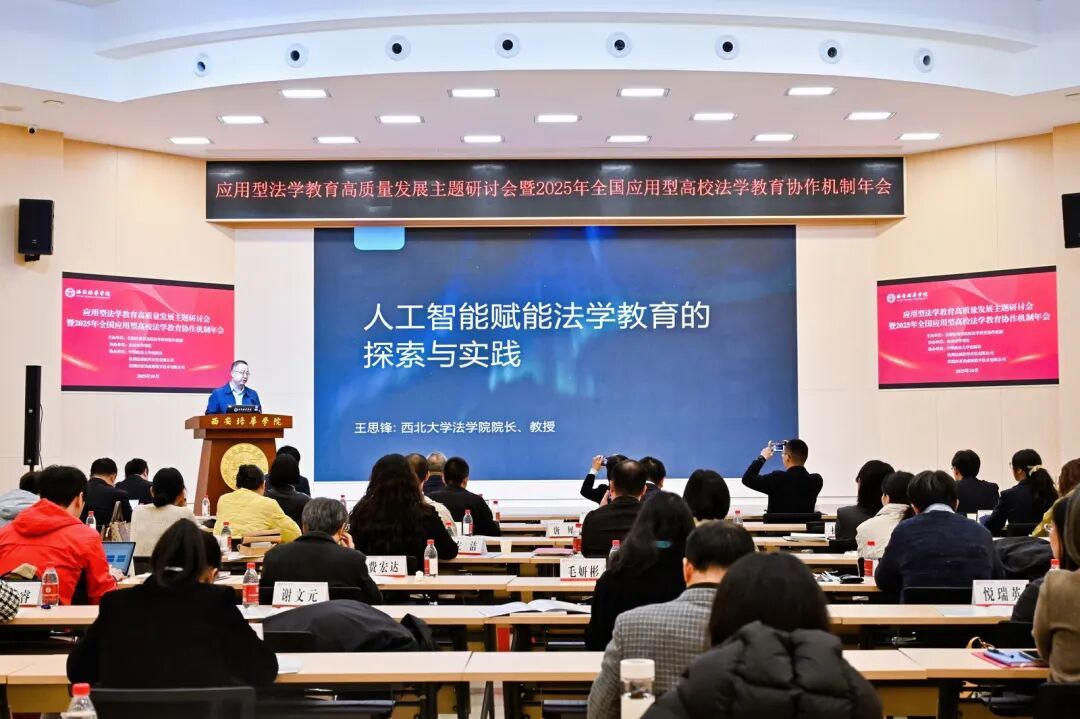
The conference focused on the theme of “Digital Intelligence Empowerment, Practical Orientation, Bridging China and the World: Innovation and Development of Applied Legal Education”, exploring the high-quality development path of applied legal education in universities from three perspectives: artificial intelligence empowerment, brand building of legal majors, and cultivation of foreign-related legal talents.
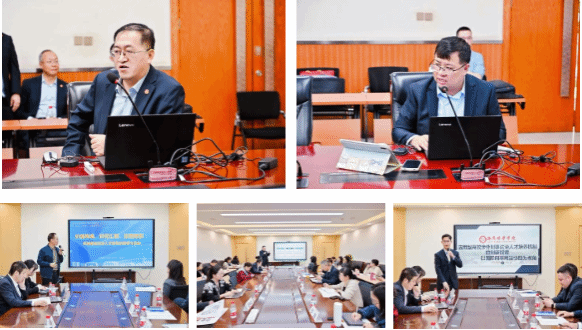
During the thematic discussion session, Weng Yi, Director of the Teaching and Research Section of Xiehe College of Fujian Normal University; Yan Jingzhong from Suqian University; and Wang Qingyu, Director of Director of the Practical Teaching and Research Office, along with Liu Gengxin, faculty member, both from the School of Law of Xi’an Peihua University, engaged in an in-depth discussion on “Exploration and Practice of Empowering Legal Education with Artificial Intelligence”. Professor Wang Lirong, a faculty member of the School of Law and Politics of Guangzhou University of Applied Science and Technology and a doctoral supervisor at Southwest University of Political Science and Law, provided comments.
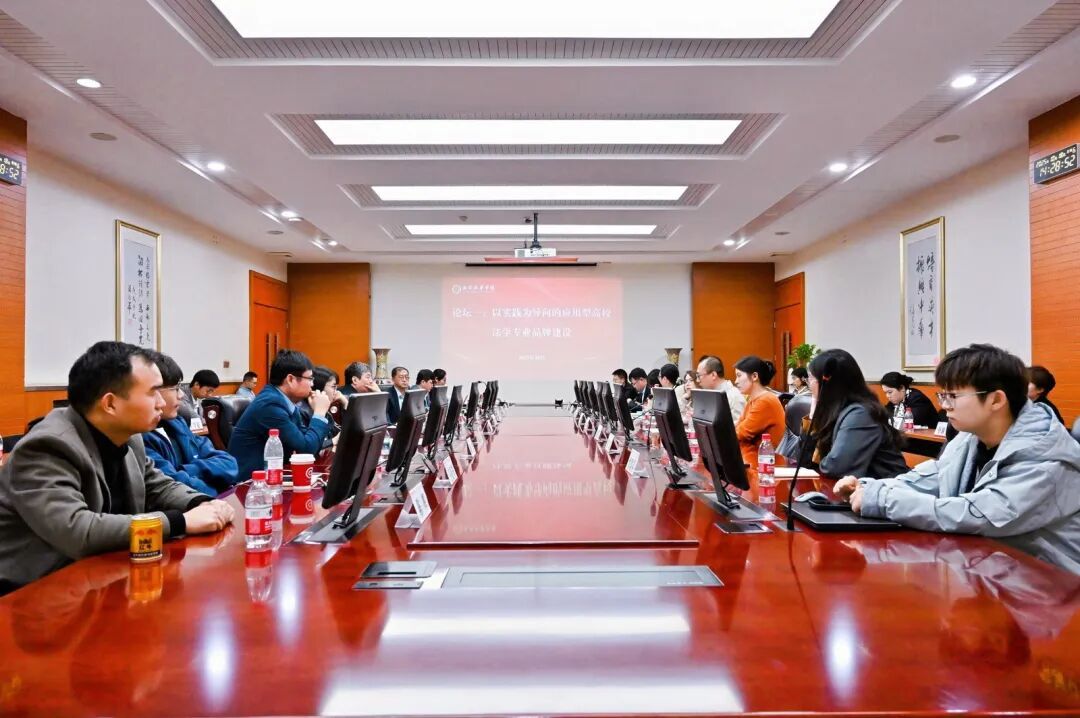
At the two parallel forums, experts and scholars engaged in in-depth exchanges around the conference theme and put forward many new viewpoints. Six teachers, including Jia Jianjun, centered on enhancing the practicality of legal education and improving the training mechanism, exchanged views on the talent cultivation model of “Practice-Oriented Brand Building of Applied Law Programs in Universities.” Another six teachers, including Xuan Meiling, discussed the cultivation model of grassroots and foreign-related legal talents around the topic of “Exploration of the Concepts, Models and Paths for Cultivating Foreign-related Applied Legal Talents in the New Era”.
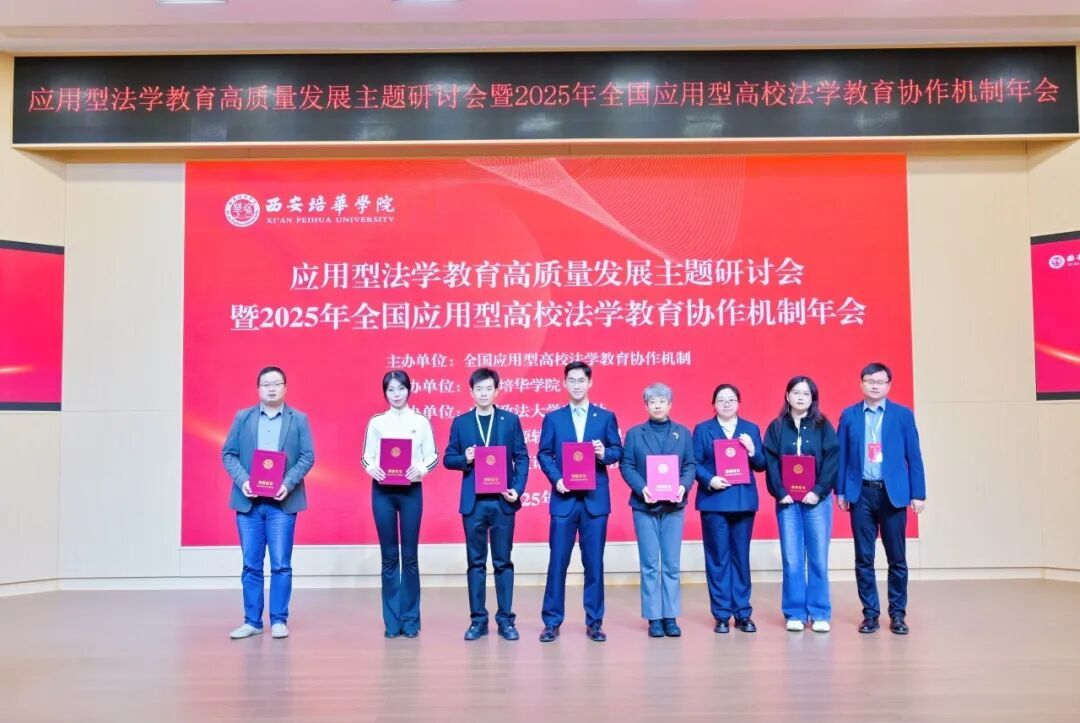
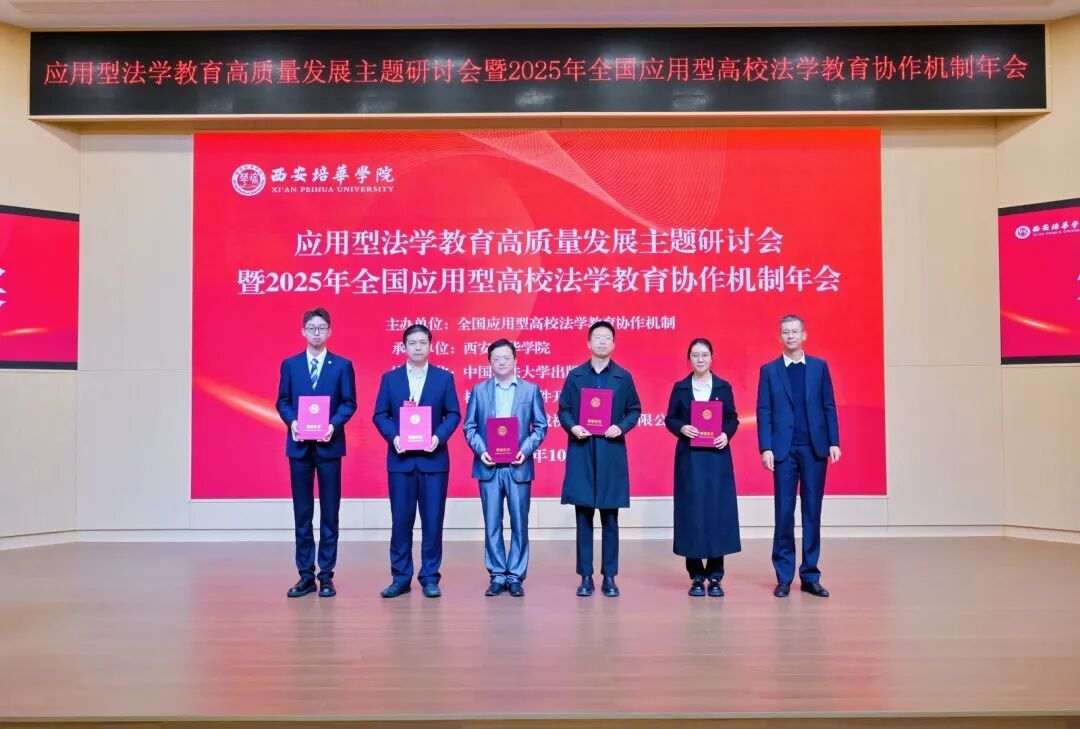
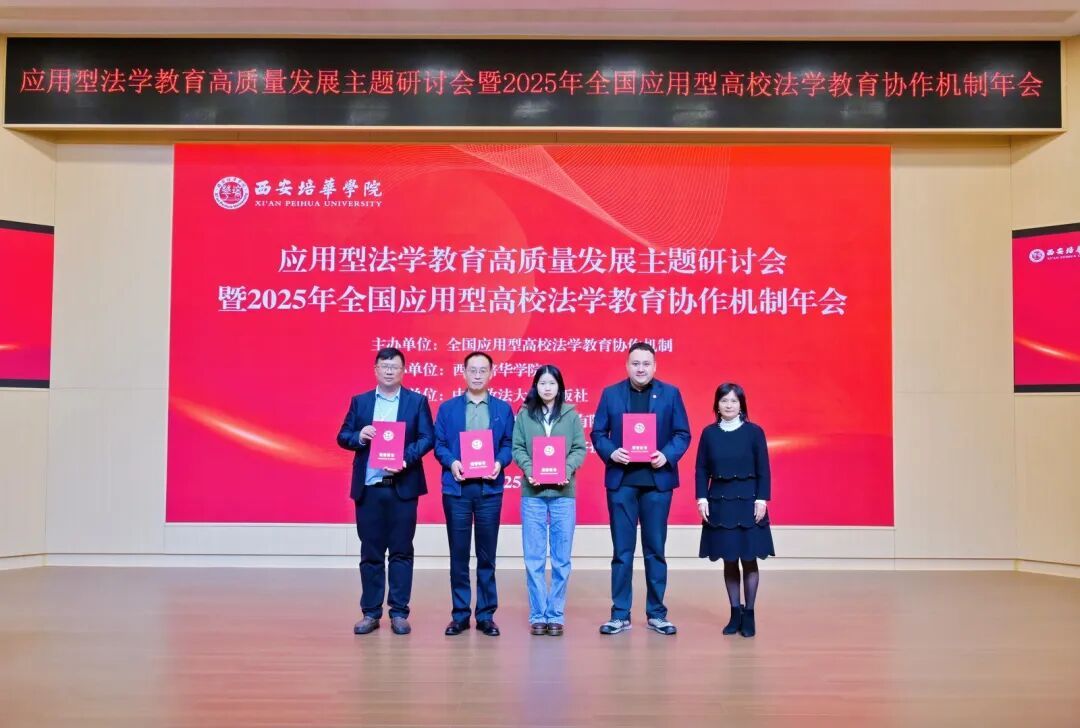
Huang Di, Deputy Secretary-General of the National Collaborative Mechanism for Legal Education in Applied Universities and Director of the Education Practice Center of Southwest Petroleum University, announced the list of winners. Wang Hongmao,Dean of the School of Law of Xi’an Peihua University, and Liu Hong, Secretary-General of the National Collaborative Mechanism for Legal Education in Applied Universities, presented awards to the winning contestants. Fang Yuan, Deputy Secretary-General of the National Collaborative Mechanism for Legal Education in Applied Universities and Associate Professor at Guangzhou College of Applied Sciences, delivered a summary report, bringing this seminar to a successful conclusion.

The successful holding of the annual Conference of the National Collaborative Mechanism for Applied Legal Education has injected strong impetus into the high-quality development of the law program of Xi’an Peihua University, marking an important milestone in in the university’s efforts to deepen disciplinary development and enhance its educational capacity. As a pioneer and benchmark of privately run legal education in Northwest China, the university has taken this event as a valuable opportunity to integrate its program development into the national landscape of applied legal education. Through this platform, Xi’an Peihua University has achieved multiple breakthroughs in resource integration, conceptual advancement, and practice-oriented empowerment.
In the future, the law program will focus on core topics such as “Empowering legal Education with Artificial Intelligence” and “brand building for applied law programs.” The university will transform expert consensus into reform practices, deepen collaborative education with industry partners, and upgrade the “dual-teacher classroom” into a more advanced model featuring joint course development and co-supervised practical training between the university and enterprises.